


What are Zoonotic Fungal Infections?
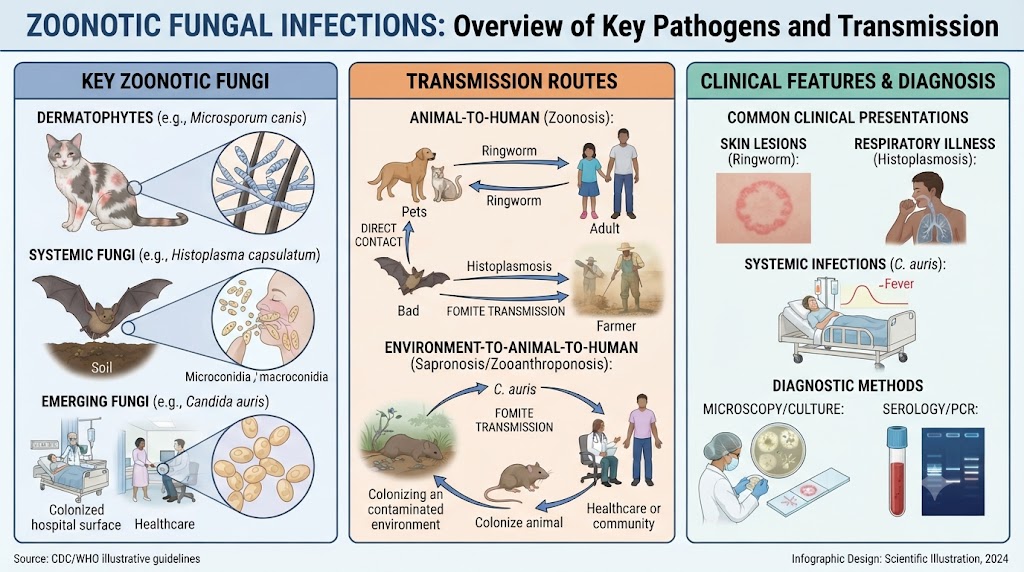
Zoonotic fungal infections are fungal diseases transmitted from animals to humans. These infections occur when fungi present on animals or in their environment infect humans, often through direct contact or inhalation of spores.
What Causes Zoonotic Fungal Infections?
- Fungal Pathogens – Common fungi include species like Microsporum, Trichophyton, and Sporothrix.
- Transmission Routes – Direct contact with infected animals (pets, livestock, or wildlife), exposure to contaminated soil, or inhalation of fungal spores.
What Are the Symptoms of Zoonotic Fungal Infections?
Symptoms depend on the type and location of the infection but commonly include:
- Skin rashes, itching, redness, and scaling (e.g., ringworm)
- Nodules or ulcers on the skin in sporotrichosis
- Respiratory symptoms such as cough, chest pain, and difficulty breathing in pulmonary infections
- Fever and malaise in systemic infections
How Are Zoonotic Fungal Infections Diagnosed?
- Physical Examination – Assessing characteristic skin or respiratory signs.
- Microscopic Examination and Culture – Samples from skin scrapings, sputum, or tissue to identify fungal organisms.
- Biopsy – To confirm invasive or deep tissue fungal infections.
- Serological Tests – To detect antibodies or antigens in systemic infections.
How Are Zoonotic Fungal Infections Treated?
- Antifungal Medications – Topical treatments for superficial infections and systemic antifungals (e.g., itraconazole, fluconazole, amphotericin B) for deeper or widespread infections.
- Supportive Care – To relieve symptoms and prevent secondary infections.
- Removal of Source – Treating infected animals and decontaminating environments to prevent reinfection.
Prognosis of Zoonotic Fungal Infections
Most superficial fungal infections respond well to treatment, but systemic or invasive infections can be serious and require prolonged therapy. Early diagnosis improves outcomes.
Can Zoonotic Fungal Infections Be Prevented?
- Avoiding Direct Contact – With infected animals or contaminated materials.
- Good Hygiene – Regular handwashing after handling animals.
- Proper Animal Care – Routine veterinary checks and treatment of fungal infections in pets or livestock.
- Environmental Sanitation – Cleaning and disinfecting areas where animals live or roam.
- Protective Clothing – For people at higher risk due to occupational exposure.
