What is a Liver Cyst?
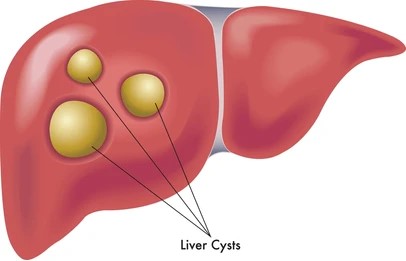
A liver cyst is a fluid-filled sac that forms in the liver. These cysts can vary in size and are often discovered incidentally during imaging tests performed for other health concerns. Most liver cysts are benign (non-cancerous) and do not cause symptoms. However, in rare cases, larger cysts or complicated cysts may lead to discomfort or other complications.

Types of Liver Cysts?
Liver cysts can be classified based on their characteristics:
1. Simple Liver Cyst
A simple liver cyst is the most common type. It is usually round or oval and filled with clear fluid. Simple cysts are typically asymptomatic and do not cause harm or require treatment unless they become large enough to cause discomfort.
2. Polycystic Liver Disease (PLD)
Polycystic liver disease is a genetic condition where numerous cysts develop in the liver over time. It is often associated with polycystic kidney disease (PKD). In some cases, the cysts can grow large and cause the liver to become enlarged, leading to symptoms.
3. Hydatid Liver Cyst
A hydatid cyst is caused by the infection of the liver by the Echinococcus parasite, commonly found in dogs. It can lead to more complex cysts that may cause pain, liver dysfunction, or rupture, which requires urgent medical attention.
4. Cystadenoma and Cystadenocarcinoma
These are rare types of cysts that have the potential to become cancerous. Cystadenomas are benign but may eventually develop into cystadenocarcinomas, a type of liver cancer. Early detection is crucial for managing these cysts.
Causes of Liver Cysts?
Liver cysts can arise from various factors, such as:
- Congenital causes: Some people are born with liver cysts due to genetic mutations, such as in polycystic liver disease.
- Infections: Parasitic infections, particularly Echinococcus, can cause hydatid liver cysts.
- Blockages in bile ducts: Obstruction in the bile ducts can lead to cyst formation.
- Trauma or injury: Injury to the liver may result in the development of cysts.
- Liver tumors: Benign liver tumors, such as hemangiomas, can occasionally lead to cyst formation.
Symptoms of Liver Cyst?
In most cases, liver cysts do not cause symptoms and are found incidentally during imaging tests. However, larger or complicated cysts can lead to the following symptoms:
- Abdominal pain or discomfort: Pain in the upper right side of the abdomen, especially after eating.
- Bloating or fullness: Feeling of fullness or bloating in the abdomen due to large cysts.
- Jaundice: Yellowing of the skin and eyes, which may occur if a cyst blocks the bile ducts.
- Nausea and vomiting: Caused by the pressure exerted by large cysts on surrounding organs.
- Liver dysfunction: In rare cases, if the cyst is large enough, it can impair the liver’s ability to function properly.
Diagnosis of Liver Cysts?
Liver cysts are often diagnosed through imaging tests, such as:
- Ultrasound: This is the most common and effective method for detecting liver cysts. It can help identify cyst size, location, and characteristics.
- CT scan (Computed Tomography): A CT scan provides detailed images and helps identify the exact size and number of cysts, particularly useful for complicated cysts or when malignancy is suspected.
- MRI (Magnetic Resonance Imaging): An MRI can offer additional detail and help differentiate between simple cysts and more complex lesions.
- Blood tests: Blood tests may be used to assess liver function and check for signs of infection or other liver problems.
- Biopsy: In rare cases, a biopsy may be needed to rule out cancer or other diseases if the cyst is unusually large or complex.
Treatment of Liver Cysts?
Most liver cysts do not require treatment unless they cause symptoms or complications. Treatment options include:
1. Observation
If the cyst is asymptomatic and small, the most common approach is to monitor it periodically with imaging tests to ensure it doesn’t grow or cause any issues. In most cases, simple liver cysts do not require any intervention.
2. Drainage or Aspiration
For larger cysts that cause discomfort, aspiration or drainage may be used. This procedure involves removing the fluid from the cyst using a needle, either through the skin or through an endoscopic procedure. However, there is a risk of the cyst re-filling with fluid over time.
3. Surgical Removal
In some cases, surgical removal of the cyst may be necessary, especially if it is large, symptomatic, or complicated. Surgery may involve the removal of the entire cyst or part of the liver.
4. Medications
For hydatid cysts, treatment with antiparasitic medications may be necessary to address the underlying infection. Albendazole is commonly used to treat hydatid disease.
5. Liver Transplantation
In cases where the liver is severely affected by multiple large cysts, such as in polycystic liver disease, and other treatment options are ineffective, liver transplantation may be considered.
Complications of Liver Cysts?
While most liver cysts are benign and cause no complications, some can lead to the following issues:
- Infection: Hydatid liver cysts, in particular, can become infected, leading to severe complications.
- Rupture: Large cysts may rupture, causing sudden pain, bleeding, and potentially life-threatening complications. This is more common with hydatid cysts.
- Obstruction of bile ducts: Large cysts may block the bile ducts, leading to jaundice or cholangitis (infection of the bile ducts).
- Liver dysfunction: In cases of polycystic liver disease, the liver may become enlarged and dysfunctional over time, potentially leading to liver failure.
Prevention of Liver Cysts?
Since most liver cysts are congenital or occur without a known cause, there is no specific way to prevent them. However, reducing the risk of complications involves:
- Regular monitoring: People with polycystic liver disease or other known risk factors should undergo regular check-ups and imaging tests to monitor the growth of cysts.
- Treatment of underlying conditions: Early detection and management of infections like hydatid disease can help prevent complications.
- Avoiding alcohol and toxins: Excessive alcohol use and exposure to toxic substances can worsen liver health and increase the risk of liver complications.
When to See a Doctor?
You should consult a healthcare provider if you experience any symptoms associated with liver cysts, such as persistent abdominal pain, bloating, jaundice, or nausea. It is also important to seek medical attention if you have a known condition like polycystic liver disease, as regular monitoring can help prevent complications.