


What is Polymorphous Low-Grade Adenocarcinoma?
Polymorphous Low-Grade Adenocarcinoma (PLGA) is a rare, slow-growing malignant tumor that arises primarily in the minor salivary glands of the mouth, especially the palate. It is considered a low-grade cancer, meaning it tends to grow slowly and is less likely to spread aggressively compared to high-grade cancers.
What causes Polymorphous Low-Grade Adenocarcinoma?
The exact cause of PLGA is not well understood. It originates from the salivary gland tissue and may be related to genetic mutations affecting cell growth regulation. There are no known specific environmental or lifestyle risk factors.
What are the symptoms of Polymorphous Low-Grade Adenocarcinoma?
Common symptoms include:
- A painless, slow-growing lump or mass in the mouth, usually on the palate
- Swelling or a firm nodule under the mucous membrane
- Occasionally, discomfort or ulceration in the affected area
- Rarely, difficulty swallowing or speaking if the tumor grows large
Because it grows slowly and painlessly, the tumor may go unnoticed for some time.
How is Polymorphous Low-Grade Adenocarcinoma diagnosed?
Diagnosis involves:
- Clinical examination: Assessing the location and characteristics of the lesion
- Imaging studies: MRI or CT scans to evaluate tumor size and involvement of surrounding tissues
- Biopsy: Tissue sampling is essential for definitive diagnosis, showing characteristic histological features of PLGA
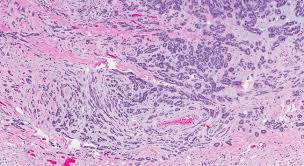
- Histopathological analysis: Under the microscope, the tumor shows diverse growth patterns but low-grade features
Accurate diagnosis helps differentiate PLGA from other salivary gland tumors.
What are the treatment options for Polymorphous Low-Grade Adenocarcinoma?
Treatment primarily involves:
- Surgical removal: Complete excision of the tumor with clear margins is the main treatment
- Radiation therapy: May be considered if surgical margins are positive or if surgery is not feasible
- Regular follow-up is necessary to monitor for recurrence
PLGA rarely spreads to distant organs but can recur locally if not fully removed.
What is the prognosis for Polymorphous Low-Grade Adenocarcinoma?
The prognosis is generally good due to the tumor’s slow growth and low-grade nature. Most patients experience long-term survival following complete surgical removal. However, local recurrences can occur, so ongoing monitoring is important.

How can Polymorphous Low-Grade Adenocarcinoma be prevented or managed long-term?
There are no known preventive measures. Long-term management includes:
- Regular dental and medical check-ups
- Monitoring for any new lumps or changes in the oral cavity
- Prompt evaluation of any suspicious oral lesions
When should I see a doctor?
Consult a healthcare professional if you notice:
- A persistent lump or swelling in your mouth
- Any painless or slowly growing mass in the oral cavity
- Changes in the texture or color of the mucous membrane
- Difficulty swallowing or speaking
Early evaluation helps ensure timely diagnosis and treatment.