


What is Uptake Syndrome Type 31?
Uptake Syndrome Type 31 is a rare genetic disorder that affects the cellular transport system responsible for the uptake of essential molecules, nutrients, or ions into the cells. This defect leads to impaired cellular function, resulting in a variety of metabolic and neurological symptoms. As part of the broader group of uptake syndromes, Type 31 is defined by its unique genetic mutation and clinical presentation.
What Causes Uptake Syndrome Type 31?
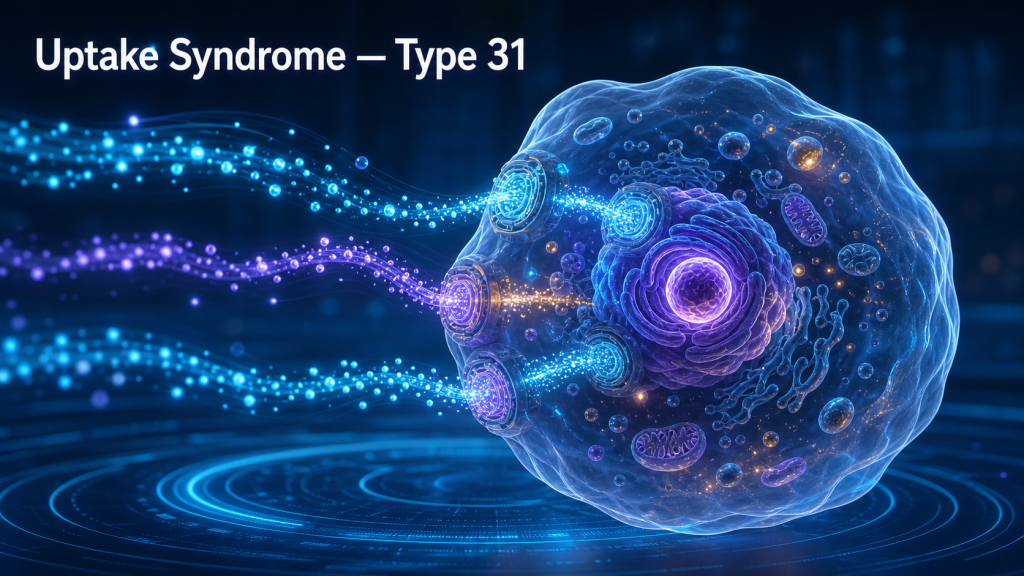
- Caused by mutations in genes coding for specific transporter proteins that regulate cellular uptake.
- These mutations lead to faulty or deficient transporter function.
- The disorder is typically inherited in an autosomal recessive pattern.
- The impaired uptake results in intracellular shortages despite normal external levels of the affected molecules.
Symptoms of Uptake Syndrome Type 31
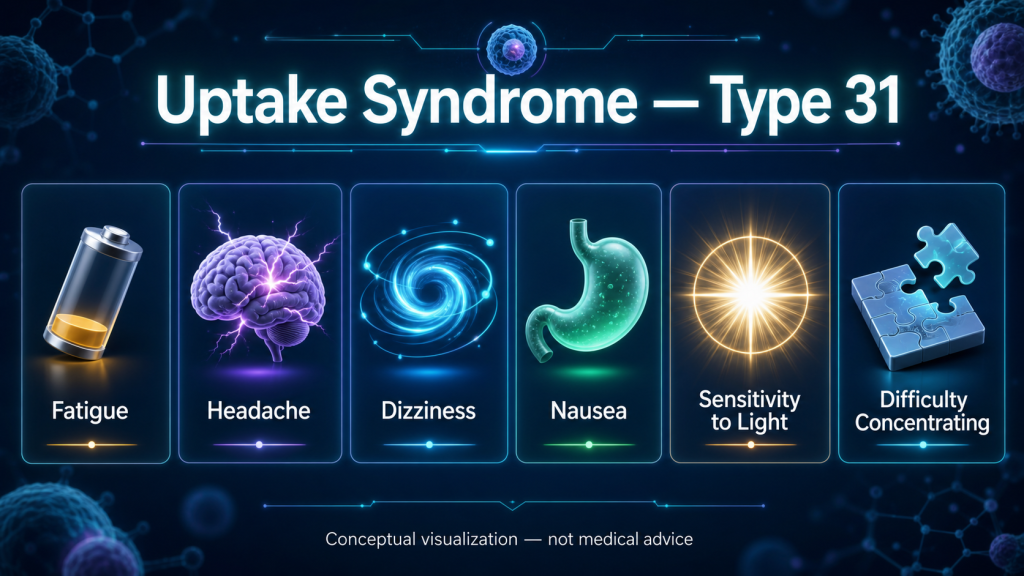
Symptoms usually appear in infancy or early childhood and can vary:
- Delayed growth and poor weight gain.
- Neurological impairments, including developmental delay, seizures, and muscle weakness.
- Feeding difficulties and vomiting.
- Low muscle tone (hypotonia).
- Metabolic imbalances, such as acidosis or abnormal blood chemistries.
- Possible involvement of other organs depending on the affected molecule.
How is Uptake Syndrome Type 31 Diagnosed?
Diagnosis involves:
- Clinical evaluation focusing on developmental milestones and neurological status.
- Laboratory tests including blood and urine analysis to detect biochemical abnormalities.
- Genetic testing to identify mutations specific to Type 31.
- Cellular uptake assays to assess transporter function.
- Imaging studies, like MRI, may be used if neurological symptoms are significant.
- Family genetic counseling and screening may be advised.
How is Uptake Syndrome Type 31 Treated?
There is no definitive cure; treatment focuses on symptom management:
- Nutritional supplementation with forms of nutrients that bypass the defective transporter.
- Dietary modifications to support metabolism.
- Medications to control seizures or other neurological symptoms.
- Supportive therapies such as physical, occupational, and speech therapy.
- Regular monitoring of growth, development, and metabolic status.
- Genetic counseling for affected families.
Prognosis of Uptake Syndrome Type 31
- Prognosis depends on severity, early diagnosis, and treatment efficacy.
- Early intervention can improve developmental outcomes.
- Some individuals may experience lifelong neurological or metabolic issues requiring ongoing care.
Can Uptake Syndrome Type 31 Be Prevented?
- Prevention is not possible post-conception.
- Carrier screening and prenatal diagnosis can inform family planning.
- Preimplantation genetic diagnosis (PGD) is an option for at-risk couples undergoing IVF.
When Should You See a Doctor?
Seek medical advice if:
- There are signs of developmental delay or failure to thrive.
- Neurological symptoms such as seizures or muscle weakness occur.
- Persistent feeding difficulties or metabolic symptoms arise.
- There is a family history of metabolic or genetic disorders.
