What Is Nipple Eczema?
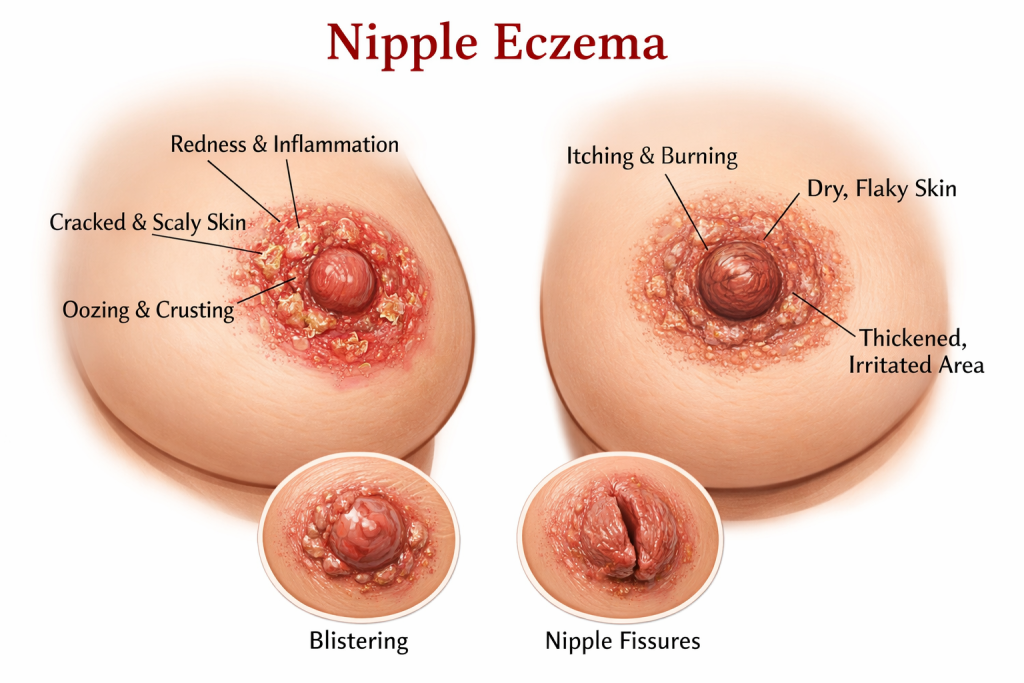
Nipple Eczema, also known as eczema of the nipple or areola, is a form of dermatitis that causes itching, redness, dryness, or cracking of the skin around the nipple. It can affect one or both nipples and may occur in both men and women, though it is more common in breastfeeding women due to irritation and sensitivity in that area.
This condition is usually non-contagious and can be managed effectively with proper skin care and treatment.
What Causes Nipple Eczema?
Nipple eczema can be triggered or worsened by various factors. Common causes include:
- Atopic dermatitis (a genetic skin condition)
- Irritants such as soaps, perfumes, or harsh detergents
- Allergic reactions (e.g., to laundry detergent, lotions, or fabrics)
- Friction from clothing or breastfeeding
- Dry skin
- Sweating and heat
- Hormonal changes
Sometimes, nipple eczema is mistaken for other conditions, such as Paget’s disease of the breast, which is why proper diagnosis is important.
What Are the Symptoms of Nipple Eczema?
Symptoms typically affect the nipple and surrounding areola and may include:
- Redness and inflammation
- Dry, scaly, or flaky skin
- Itching or burning sensation
- Cracking or crusting
- Clear fluid discharge
- Pain or tenderness, especially during breastfeeding
In severe cases, bleeding or thickened skin may occur if left untreated.
How Is Nipple Eczema Diagnosed?
Diagnosis is usually based on physical examination and medical history. A doctor may:
- Examine the affected area
- Ask about personal or family history of eczema or allergies
- Rule out infections or other conditions like Paget’s disease (a rare form of breast cancer)
If necessary, a skin biopsy may be done to confirm the diagnosis and rule out serious issues.
How Is Nipple Eczema Treated?
Treatment focuses on relieving symptoms and preventing flare-ups. Common treatments include:
1. Topical Corticosteroids
- Mild steroid creams or ointments reduce inflammation and itching.
- Applied sparingly to affected areas.
2. Moisturizers and Emollients
- Keep skin hydrated and reduce dryness.
- Fragrance-free, hypoallergenic creams are best.
3. Avoiding Triggers
- Use gentle, non-irritating soaps and laundry detergents.
- Avoid wearing tight or scratchy clothing.
4. Breastfeeding Adjustments
- Use lanolin cream to soothe nipples.
- Ensure proper latch to reduce friction.
5. Antibiotics or Antifungal Creams
- May be prescribed if there’s a secondary infection.
In persistent or unclear cases, referral to a dermatologist may be necessary.
What Is the Prognosis?
Most cases of nipple eczema respond well to treatment. With proper skin care and avoidance of triggers, flare-ups can be minimized or prevented. In breastfeeding mothers, treatment should be chosen carefully to avoid affecting the baby.
If symptoms don’t improve or worsen, it’s essential to follow up with a healthcare provider to rule out more serious conditions.
Can Nipple Eczema Be Prevented?
While it may not always be preventable, flare-ups can often be avoided by:
- Keeping the area clean and moisturized
- Using gentle skin care products
- Wearing soft, breathable fabrics
- Avoiding known allergens and irritants
- Managing underlying eczema or allergic conditions