


What is Hypoplastic Left Heart Syndrome?
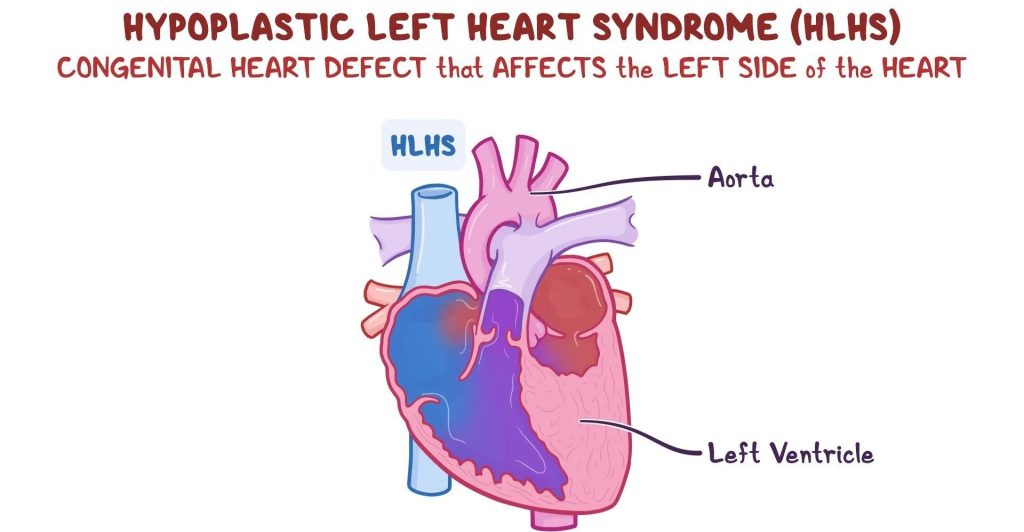
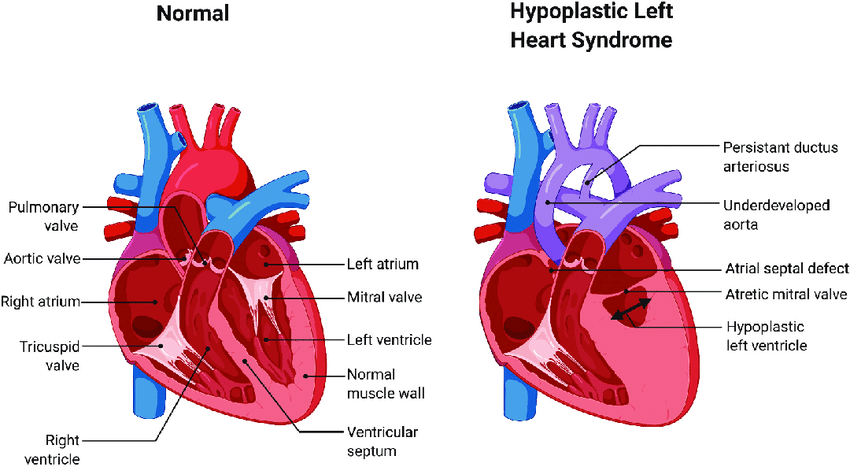
Hypoplastic Left Heart Syndrome (HLHS) is a rare and serious congenital heart defect in which the left side of the heart is underdeveloped. This includes critical structures such as the left ventricle, mitral valve, aortic valve, and ascending aorta. Because the left side of the heart is responsible for pumping oxygen-rich blood to the body, HLHS significantly impairs normal circulation.
HLHS is a life-threatening condition that requires immediate medical attention after birth. Without treatment, it is fatal within the first few days or weeks of life.
What causes Hypoplastic Left Heart Syndrome?
The exact cause of HLHS is unknown, but it develops during fetal growth when the left-sided heart structures do not form properly. It is likely influenced by genetic and environmental factors, though most cases occur sporadically with no family history.
In some cases, HLHS may be associated with chromosomal abnormalities or other congenital syndromes.
Who is at risk?
- HLHS occurs in newborns, affecting about 1 in every 3,800 live births.
- It affects both boys and girls, though it is slightly more common in males.
- Families with a history of congenital heart defects may have a slightly increased risk.
What are the symptoms of Hypoplastic Left Heart Syndrome?
Babies with HLHS usually appear normal at birth but develop symptoms within the first few hours to days of life as the ductus arteriosus closes (a temporary blood vessel that helps with circulation before birth).
Common symptoms include:
- Bluish or gray skin color (cyanosis) due to lack of oxygen
- Rapid breathing
- Difficulty feeding
- Lethargy or poor responsiveness
- Weak pulse
- Cold hands and feet
- Signs of heart failure
Without urgent treatment, HLHS can lead to shock, organ failure, and death.
How is Hypoplastic Left Heart Syndrome diagnosed?
During pregnancy:
- HLHS can often be detected during routine prenatal ultrasound or fetal echocardiogram in the second trimester.
After birth:
- Diagnosis is confirmed by:
- Echocardiography (heart ultrasound)
- Pulse oximetry (to detect low oxygen levels)
- Chest X-ray and ECG
Early detection allows for planning immediate treatment after birth.
How is Hypoplastic Left Heart Syndrome treated?
HLHS requires urgent medical and surgical intervention. Treatment options include:
1. Staged Heart Surgeries (most common approach)
This includes a series of three open-heart surgeries that gradually redirect blood flow:
- Norwood procedure (within the first week of life): Creates a new aorta and connects it to the right ventricle.
- Glenn procedure (at 4–6 months): Redirects blood from the upper body to the lungs.
- Fontan procedure (at 18 months to 3 years): Directs blood from the lower body to the lungs.
These surgeries do not cure HLHS but allow the right side of the heart to do the work of both sides.
2. Heart Transplant
In some cases, a heart transplant may be recommended. This offers a more typical heart function but comes with lifelong immune-suppressing medications and risks of rejection.
3. Palliative Care
If surgery or transplant is not an option, families may choose comfort-focused care.
What are the complications of HLHS?
Even with treatment, HLHS can lead to:
- Heart failure
- Arrhythmias
- Developmental delays
- Feeding difficulties
- Stroke or blood clots
- Organ dysfunction (especially of the lungs or liver)
Lifelong follow-up with a cardiologist is necessary.
What is the outlook for children with HLHS?
The prognosis has improved significantly with advances in surgery and care. Many children survive through childhood and beyond, though they may face:
- Multiple hospitalizations
- Exercise limitations
- Need for further surgeries
- Psychosocial support needs
Some children eventually require a heart transplant in adolescence or adulthood. Quality of life varies, but many go on to attend school and lead active lives with the right support.
Can Hypoplastic Left Heart Syndrome be prevented?
HLHS cannot be prevented, but:
- Prenatal screening helps with early diagnosis and planning.
- Genetic counseling may be offered to families with a history of congenital heart defects.
- Maintaining a healthy pregnancy (avoiding smoking, alcohol, and managing diabetes) may reduce the risk of birth defects in general.