


What Is Dystonia?
Dystonia is a neurological movement disorder that causes abnormal muscle contractions, leading to twisting, repetitive movements, or abnormal postures. These muscle contractions can affect different parts of the body, including the neck, face, arms, legs, or even the entire body. The condition can range from mild to severe and can interfere with daily activities such as walking, writing, or speaking.
Dystonia is not a single disease but rather a group of disorders that share these characteristic muscle contractions. It can be primary (occurring on its own) or secondary (caused by another medical condition or injury).
What Causes Dystonia?
The exact cause of dystonia is often unclear, but several factors are believed to contribute to its development:
- Genetic mutations: In some cases, dystonia can be inherited through a genetic mutation, with specific forms like primary dystonia being linked to certain genes.
- Brain abnormalities: Dystonia often involves dysfunction in the basal ganglia, the part of the brain responsible for controlling muscle movements. Abnormalities in the brain’s motor control centers can lead to the muscle contractions seen in dystonia.
- Head or brain injury: In some cases, dystonia can develop after a brain injury, such as from a stroke, trauma, or infection.
- Other medical conditions: Conditions such as Parkinson’s disease, Huntington’s disease, or multiple sclerosis may lead to secondary dystonia, as the underlying neurological disorder affects motor function.
- Medications: Certain medications, particularly those that affect the nervous system (e.g., antipsychotics), can trigger dystonia as a side effect.
What Are the Symptoms of Dystonia?
The main symptom of dystonia is muscle contractions that cause abnormal movements or postures. The symptoms can vary depending on the type of dystonia and which muscles are affected. Common signs include:
- Twisting movements: Muscles may contract involuntarily, causing parts of the body to twist or contort.
- Abnormal postures: The affected body part may become stuck in an awkward or unnatural position.
- Pain and discomfort: Persistent muscle contractions can cause pain, soreness, or stiffness in the affected muscles.
- Difficulty with fine motor skills: Tasks like writing, buttoning a shirt, or tying shoelaces may become challenging due to muscle control issues.
- Speech problems: If dystonia affects the muscles involved in speaking, it can lead to difficulty speaking clearly (dysarthria).
- Tremors or shaking: In some cases, dystonia may be accompanied by tremors, although this is more common in certain types of dystonia.
The severity of symptoms can vary from person to person, and in some cases, symptoms may worsen over time.

What Are the Types of Dystonia?
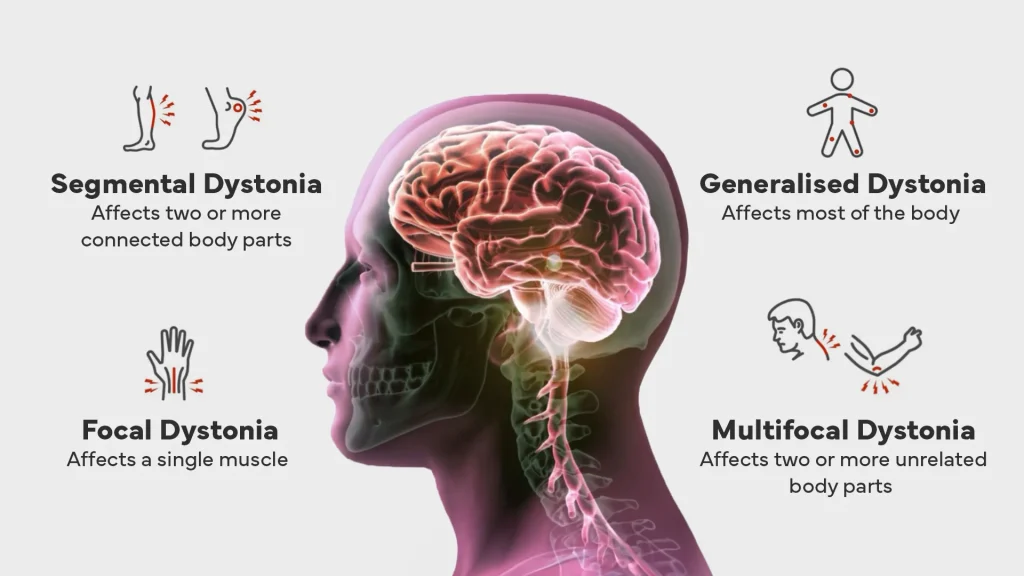
Dystonia is classified into different types based on the areas of the body affected:
- Focal dystonia: This type affects one specific part of the body, such as the neck (cervical dystonia), eyes (blepharospasm), or hand (writer’s cramp).
- Segmental dystonia: This involves two or more adjacent body parts, such as the neck and shoulder.
- Generalized dystonia: This type affects most or all of the body and is often more severe.
- Task-specific dystonia: This occurs during specific activities, such as playing a musical instrument (musician’s dystonia) or writing (writer’s cramp).
- Cervical dystonia: Affects the muscles of the neck, causing the head to twist to one side.
- Blepharospasm: Affects the eyelid muscles, causing involuntary blinking or the inability to keep the eyes open.
How Is Dystonia Diagnosed?
Diagnosing dystonia involves several steps:
- Medical history: The doctor will ask about your symptoms, medical background, and family history of movement disorders.
- Physical examination: The healthcare provider will observe your movements and assess muscle control, coordination, and posture.
- Neurological tests: To rule out other potential causes of abnormal movements, additional tests such as MRI or CT scans may be conducted to examine brain function.
- Genetic testing: If dystonia is suspected to be hereditary, genetic testing may be performed to identify specific gene mutations.
- Blood tests: Blood tests can help rule out other conditions that might mimic dystonia.
A neurologist or movement disorder specialist typically makes the diagnosis based on the clinical examination and test results.
What Treatments Are Available for Dystonia?
There is no cure for dystonia, but several treatments can help manage symptoms and improve quality of life:
- Medications:
- Anticholinergic drugs: These can help reduce muscle contractions and improve movement.
- Muscle relaxants: Medications like baclofen can help relax the affected muscles.
- Botulinum toxin (Botox) injections: Botox injections into affected muscles can temporarily block the nerve signals causing muscle contractions.
- Dopamine agonists: These are sometimes used to treat dystonia caused by Parkinson’s disease or other conditions involving dopamine imbalances.
- Physical therapy: Physical therapy can help improve movement, strength, and flexibility, and assist with daily activities affected by dystonia.
- Occupational therapy: Occupational therapy focuses on improving fine motor skills and teaching coping strategies for tasks that are affected by dystonia.
- Surgical treatments: In severe cases, surgery may be considered. Options include:
- Deep brain stimulation (DBS): A surgical procedure that involves implanting electrodes in specific parts of the brain to help regulate abnormal brain activity.
- Selective denervation: A procedure in which nerves responsible for the muscle contractions are severed.
- Psychological support: Living with dystonia can be emotionally challenging, so therapy or counseling may help individuals cope with the emotional and psychological impact of the disorder.
Can Dystonia Be Prevented?
Currently, there is no known way to prevent dystonia, especially since many cases are caused by genetic factors or underlying medical conditions. However, early diagnosis and treatment can help manage symptoms and prevent the condition from worsening.
If dystonia is secondary to another condition (such as Parkinson’s disease or a brain injury), managing the underlying condition can help reduce the risk or severity of dystonia.